
Over the past several weeks, this exploration into Authentic Assessment has addressed: Content through Context, Autonomy, and Realism. Today’s installment concentrates on Engagement.
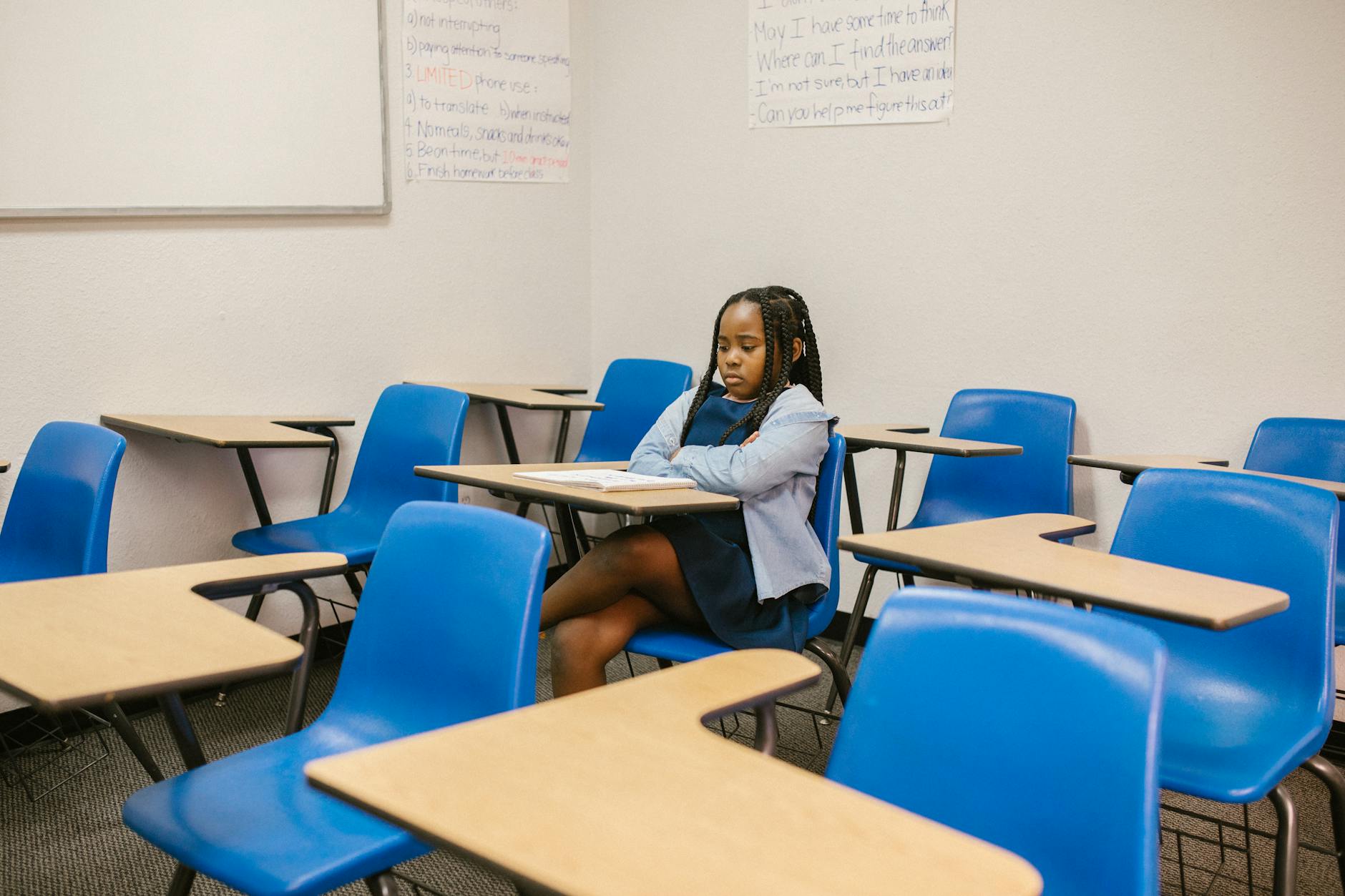
Engaging students has been a perpetual struggle in classrooms for quite some time. The disruption of COVID learning erased decades of forward movement. Face it, most students would rather be doing anything but school. When they were virtual, students resented that screen time was for classes and not gaming or posting with friends. Is there any way to find inroads back to engaging student interest in class work?
If we are really being honest, wasn’t educator engagement also a casualty, to some degree, in the pandemic? Life was just harder, whether teachers were online with students or struggling with masks in the classroom.
Assessment was very difficult to achieve through those struggles, but that was because the methods needed some adjustment. Authentic assessment provides an answer. Part of the struggle was simply being within the four walls of the classroom, so targeting real world activities makes more sense. We have already addressed the fact that learners are more interested when there is context to learning, when they have autonomous choices, and when learning is real. That alone can be a recipe for engagement.
However, just because a task exists in the real world and students can pick from several options and the use of the activity for learning is clear, that doesn’t mean they will like it. Teachers will get engagement when they select tasks which are engaging.
How long will middle school students work to patiently learn CAD and architecture? Truthfully, in my experience, about three weeks. The lessons were challenging, but the result was the layout and 3D model of a house of their own design. What propelled learners to continue through the difficulties was the intent to create something that they wanted. It wasn’t about what was required for the assignment. If that had been the case, they wouldn’t have struggled with spiral staircases and arched windows when other options were simpler. They wanted a breath-taking staircase and magnificent windows, so they persevered and searched for the steps to make them happen.
When “necessity is the mother of invention,” assessments can create that unique necessity. Students initially become engaged in the work they are doing because it is an expected part of class, but what propels them to complete the assignment and fulfill the teacher’s expectations — AND their own — is persistence based on motivation. They are willing to face challenge to reach the desired outcome.
Among the most engaging activities of pandemic learning were the science classes that engaged students as citizen scientists and kitchen experimenters. Of course, the requests had to be manageable, but when they made baking soda volcano videos in the kitchen or collected leaves outside and analyzed them, students became motivated by the tasks they were performing.
Personally, I’ve loved history as long as I can remember. It was a connection to my grandfather, a welder, who studied General Custer intently. Teaching history has had ups and downs. The standards for history class don’t leave much room for engaging activities, but creativity helps. Then, one year, I shared one of my passions — ancestry — with my students. Using a free program, FamilySearch.org, they began to build their own family trees. The expectations were that they should add information on parents, grandparents, and, if possible, great-grandparents. They navigated primary source documents like death certificates, birth certificates, marriage certificates, and census records to find the data that they needed. They conducted interviews of living relatives to hear family stories. Now and then, a touchy subject arose, but we worked through it with tact.
By the time students had great-grandparents in their family tree, most connected to existing historical records and, quite simply, their trees exploded overnight. Other people had built detailed histories of some of the people in their tree. Of course, we talked about the importance of verifying data that the student had not done for themselves, but the excitement of those days was palpable.
- In a prior lesson, we had studied the Camp Grant massacre, which was a cataclysm of U.S. government control of the west, ethnic friction between settlers and Native Americans, and long-standing difficulties between two Native American tribes. Just weeks later, when we were in the We’re History! activity on ancestry, one of my students traced her family to the same era and learned that she was a direct descendant of the U.S. Army Commander of the fort. She couldn’t wait to bring the news to me to help her check the accuracy, then to tell her classmates that what we were studying was real and that it happened in her own family!
- Another student who had struggled through class all year and was in danger of not passing the semester began the assignment begrudgingly, like most other assignments. He was weeks behind, but after a check in with parents, he got just enough motivation to enter some basic data. Overnight, one of his connections was synced with existing research and his tree expanded with astounding results. As he and his mother looked at the entries the next day, he saw some very old connections in Scotland. The family knew they were of Scottish descent, but didn’t have any detail. As they navigated the branches, they saw the name “William Wallace,” whom others might know as Braveheart. He couldn’t wait to tell me and his friends. Even better, for the remaining two months of eighth grade, he was participating and completing his other assignments…because he recognized the value of history.
I can’t take credit for all such engagements. Years ago, a teacher in Manning, Iowa, assigned her students to conduct an interview of an elderly person who was alive during World War II. Many students had family members to contact, but one young man didn’t know anyone in that age bracket. The teacher suggested that he reach out to the local senior care home. When he did, he was matched with a man named Glen Jensen who had been a pilot in World War II. He started to tell the young man about his experiences. Jensen, had learned to fly by walking many miles to an airstrip and doing work to pay for lessons. When he enlisted, he became a B-29 pilot. In 1945, he flew the Spirit of Omaha over Japan. On one day in particular, he told the boy, he and his buddies who flew another plane were loaded with their cargo and given instructions. It was a secret mission. Each plane was given a special code. When they heard the code over the radio, it was the code for the other plane, the Enola Gay. Jensen didn’t know until after he saw the nuclear explosion from high above in the distance just how dramatic the mission had been. The devastating outcome ended World War II in the Pacific and his plane had flown the mission as a backup. Of course, the young boy recognized the story of the bombing of Hiroshima and Nagasaki, which he had studied earlier in the same unit in school. He just didn’t know that the old man in the nursing home was an eyewitness to history. He went back to school and wrote his paper for class, forever changed by the experience. He even told the local paper that did a news story on the young boy and the old man, inspiring even more people who had long since forgotten the history that people experienced.
It may seem like a series of scarcely believable stories or one-in-a-million connections, but the truth is that there are so many stories in history that, if you look, everyone has at least one or two in the family tree. It just takes a little digging. Talking to people unlocks a lot of information. Everyone is an eyewitness to history. Sometimes, noteworthy events are just closer than we anticipate.
Only the engagement isn’t just through history (that’s just my thing). It can be in the beauty of nature or the puzzles of mechanics or the nuances of language or the methods of art or the patterns of music. It can be anywhere. It can be anything. Creating assessments which are explorations in any of these unique areas provide the amazing stimulation of curiosity, creativity, and wonder which impel learners to push beyond the usual limitations of effort and involvement in their class work. That’s the power of authentic assessment in action.
Teacher Takeaways
Authentic assessment motivates learners to persist through struggle with challenging tasks in order to reach a final product that exceeds their expectations because they are thoroughly engaged in the work.
 EmpowerED